
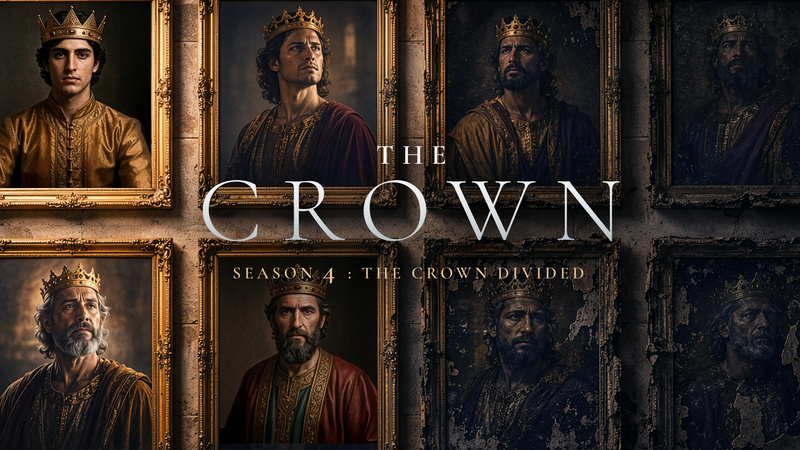
This sixth installment of The Crown Divided series brings the story of Israel's northern kingdom to its collapse. The sermon opens with an interactive game distinguishing real kings of Israel (Shallum, Menahem, Pekahiah, Pekah, Zechariah, Hoshea) from decoys (including a Pokémon), highlighting how obscure and forgettable these rulers have become — six kings, thirty-one years, and every one of them judged with the same verdict: "He did evil in the sight of the Lord."
The sermon then sets the historical stage: the Assyrian empire under Tiglath-Pileser III was the most terrifying military force the ancient world had seen, having already conquered Damascus and Galilee before turning toward Samaria. This threat wasn't exaggerated fear — it was real and overwhelming, much like the genuine fears people face today (health, relationships, finances, the future). The real question was never whether the threat was real, but where people turn when it arrives.
Three kings model three common wrong responses to fear:
- Menahem ran to money, paying massive tribute to Assyria to secure his throne — paralleling how people today chase financial security as the answer to anxiety, only to find the "bill" always comes due again.
- Pekah ran to people, forming political coalitions that backfired disastrously, drawing Assyria closer rather than repelling it — mirrored today in over-reliance on relationships, marriage, social connections, or social media validation for a security only God can provide.
- Hoshea ran to the past, secretly appealing to Egypt — the very nation Israel had been delivered from — illustrating how people under pressure regress to old, already-failed coping mechanisms.
None of them ran to God, and that failure — more than military or political miscalculation — is presented as the real reason Samaria fell in 722 BC.
By contrast, the sermon turns to Judah's King Hezekiah, who faced the same unstoppable Assyrian threat under Sennacherib. Rather than turning to treasury, allies, or old strategies, Hezekiah took the threatening letter into the temple, spread it before the Lord, and prayed for deliverance. That night, the Lord struck down the Assyrian army, and Sennacherib withdrew. Same impossible odds, same enemy — the only difference was the direction the king ran.
The sermon then connects this directly to Park Avenue Church's own upcoming initiative, Vision 2035, a $2.5 million capital campaign for new facilities. Rather than leading with fundraising strategy, the church plans to begin with 40 days of congregational prayer (August 24–October 2) culminating in a 24-hour prayer vigil, deliberately mirroring Hezekiah's posture — laying the vision before God first, trusting Him rather than money, connections, or past strategies.
The sermon closes with a direct challenge to the congregation: when personal "shadows" fall — diagnosis, marital strain, 3am anxiety, professional uncertainty — will they run to money, people, and old habits, as nineteen failed kings did, or will they "walk into the temple" as Hezekiah did? The call is to trust not in resources or strategies, but in the "God of Angel Armies."
